

Building a business takes years of hard work and commitment, but many business owners spend far less time planning what happens when it’s time to step away or the unexpected happens. Business succession planning helps prepare your business for changes in ownership or leadership, whether you’re planning to retire, sell your business or respond to unforeseen circumstances such as illness or injury. By putting a clear plan in place, you can help protect your business, employees, customers and family while supporting a smoother transition and greater confidence for everyone involved.
What Is Business Succession Planning?
Business succession planning is the process of preparing your business for a future change in ownership or leadership. While it’s often associated with retirement, it’s really about making sure your business can continue operating smoothly whenever an owner or key decision-maker steps away, whether that’s planned or unexpected.
A well-prepared succession plan helps answer some of the biggest questions business owners face:
- Who will take over running the business?
- How will ownership be transferred?
- How will day-to-day operations continue?
- How will the outgoing owner and their family be financially supported?
Rather than making important decisions under pressure, succession planning gives you the opportunity to consider your options, put the right arrangements in place and protect the business you’ve worked so hard to build.
Why Every Business Owner Needs a Succession Plan
No business owner knows exactly when they’ll step away. While retirement is often the goal, illness, injury, disability, death, selling the business or a business partner leaving can all create significant challenges if there’s no clear plan in place.
Without a succession plan, businesses can face unnecessary disruption. Decisions may be delayed, ownership disputes can arise, and financial uncertainty can place added pressure on everyone involved. Poor planning can also reduce business value and affect the confidence of employees, customers, suppliers and lenders.
A well-considered succession plan helps minimise these risks by providing a clear path forward. Rather than being something to consider only before retirement, succession planning is an important part of protecting your business and managing risk.
What Should a Business Succession Plan Include?
Every business is different, so every succession plan should reflect the owner’s goals, business structure and personal circumstances. However, most effective plans include several key elements.
- Identify future owners or business leaders: Decide who will take over ownership or management and ensure they’re ready for the role.
- Document ownership and decision-making arrangements: Outline how ownership will be transferred and who will make key decisions during the transition.
- Establish a current business valuation: Knowing what your business is worth supports fair negotiations and future planning.
- Plan how ownership will be funded or transferred: Decide whether ownership will be sold, gifted or transferred through a buy-sell agreement.
- Review shareholder or partnership agreements: Ensure existing agreements reflect current ownership arrangements and outline what happens if an owner exits.
- Consider tax implications: Planning ahead can help minimise unexpected tax consequences.
- Prepare for unexpected events: Include contingency plans for situations such as illness, disability or the death of a business owner.
- Review the plan regularly: Keep your succession plan up to date as your business and circumstances change.
Developing a comprehensive succession plan often involves working with financial advisers, accountants and legal professionals to ensure every aspect of the transition is properly considered.
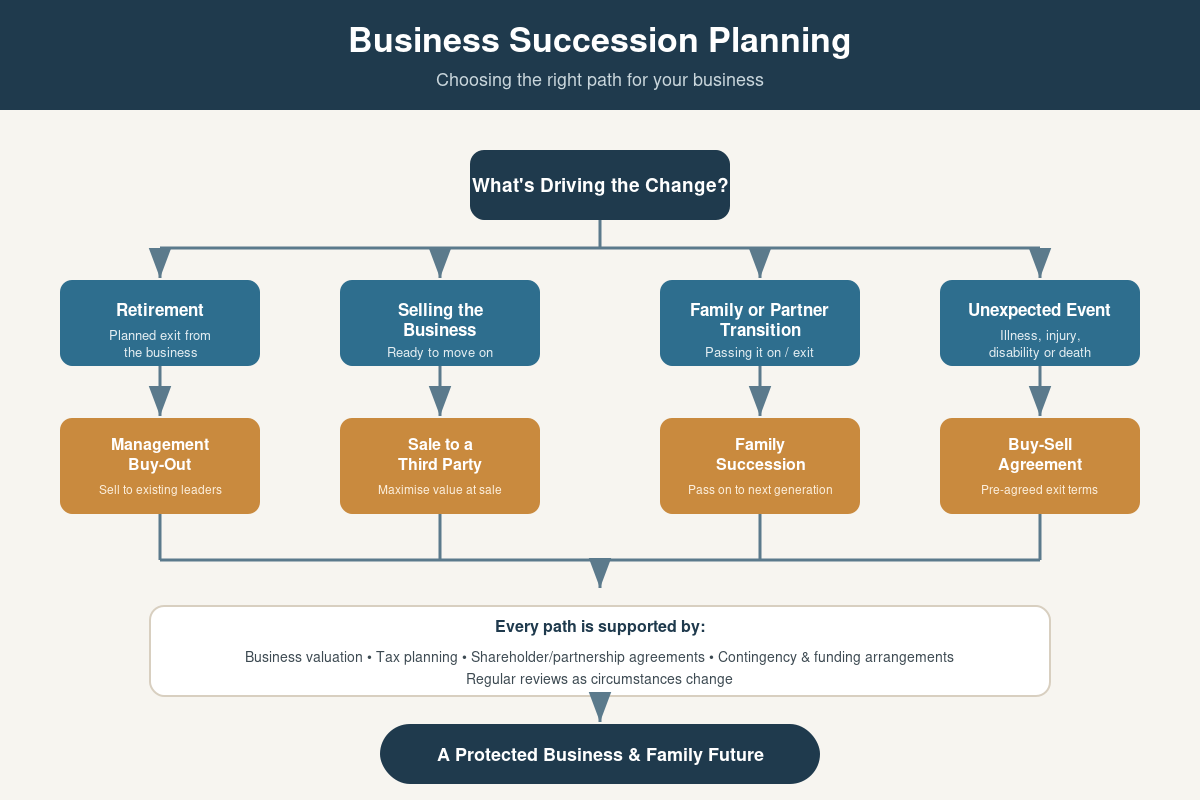
Common Business Succession Planning Strategies
There’s no one-size-fits-all approach to business succession planning. The right strategy depends on your business, personal circumstances and long-term goals.
Some of the most common approaches include:
- Family succession: Passing ownership to children or other family members while planning for a smooth transition.
- Management buy-out: Selling the business to existing managers who understand the business and its operations.
- Sale to a third party: Preparing the business for sale to maximise its value and attract buyers.
- Buy-sell agreements: Agreements between owners that outline what happens if one owner retires, passes away or exits the business.
The best approach depends on your business structure, family circumstances, financial goals and future plans. Professional advice can help you choose the strategy that’s right for you.
When Should You Start Business Succession Planning?
Many business owners assume succession planning is something to consider a year or two before retirement. In reality, the earlier you start, the better. Planning ahead gives you time to prepare future leaders, increase your business’s value, resolve ownership matters, structure your finances and update legal agreements.
As your business, ownership or personal circumstances change, your succession plan should be reviewed regularly to ensure it continues to reflect your goals and protect your business.
Getting Your Business Ready for the Future
With the right succession plan, you can create greater certainty, support business continuity, reduce financial risk and provide peace of mind for yourself, your employees and your family.
At Panorama Financial Services, we help owners develop tailored business succession plans that reflect their business, family and financial goals. Whether you’re planning for retirement or preparing for the unexpected, our experienced advisers can help you understand your options and plan for the future with confidence.
Frequently asked questions
Explore the answers to some common questions about business succession planning.
Business succession planning prepares your business for a future change in ownership or leadership. It helps ensure the business can continue operating smoothly if you retire, sell or need to step away unexpectedly.
The earlier, the better. Starting early gives you time to prepare future leaders, strengthen your business and put the right financial and legal arrangements in place before they’re needed.
A succession plan should outline who will take over the business, how ownership will be transferred and how the transition will be managed. It should also cover business valuation, funding arrangements and contingency plans, with regular reviews as your business evolves.
Small businesses often rely heavily on their owners, so an unexpected change can have a significant impact. A succession plan helps reduce disruption, provides certainty for everyone involved and protects the future of the business.


Calendar
We’re here to help you protect what matters most.
Whether you’re planning for your family, your future, or your business, our team listens, simplifies, and guides you every step of the way.
Reach out and let’s build your peace of mind together.