

Every business faces risk. Whether you’re a start-up, family business or established company, unexpected challenges are inevitable. While you can’t predict every setback, taking a proactive approach is the best way to protect your business.
That’s where risk management comes in. Rather than reacting when problems arise, it helps identify potential risks early and put measures in place to reduce their impact. Combined with appropriate business insurance, it can strengthen business continuity, improve resilience and give you greater confidence for the future.
What Is Business Risk Management?
Business risk management is the process of identifying, assessing and managing risks that could affect your business’s operations, finances and long-term success. While every business faces uncertainty, understanding potential risks helps you prepare before they become major issues.
Common risks include:
- Financial pressures
- Operational disruptions
- Legal obligations
- People risk
- Natural disasters
The goal isn’t to eliminate every risk, but to understand its potential impact and put practical measures in place to reduce it. A strong strategy combines day-to-day processes, succession planning and appropriate business insurance to help protect your business and minimise disruption when the unexpected happens.
Why Every Business Needs a Risk Management Plan
A well-considered risk management plan helps your business prepare for unexpected challenges instead of simply reacting to them. It can reduce downtime, protect your people and assets, support better decision-making and minimise the impact of disruptions on your reputation.
As your business grows, it’s important to review and update your plan, so it continues to reflect your changing operations and risks. Put simply, investing time in a risk management plan today could save your business significant time, money and stress in the future.
Common Risks That Businesses Face
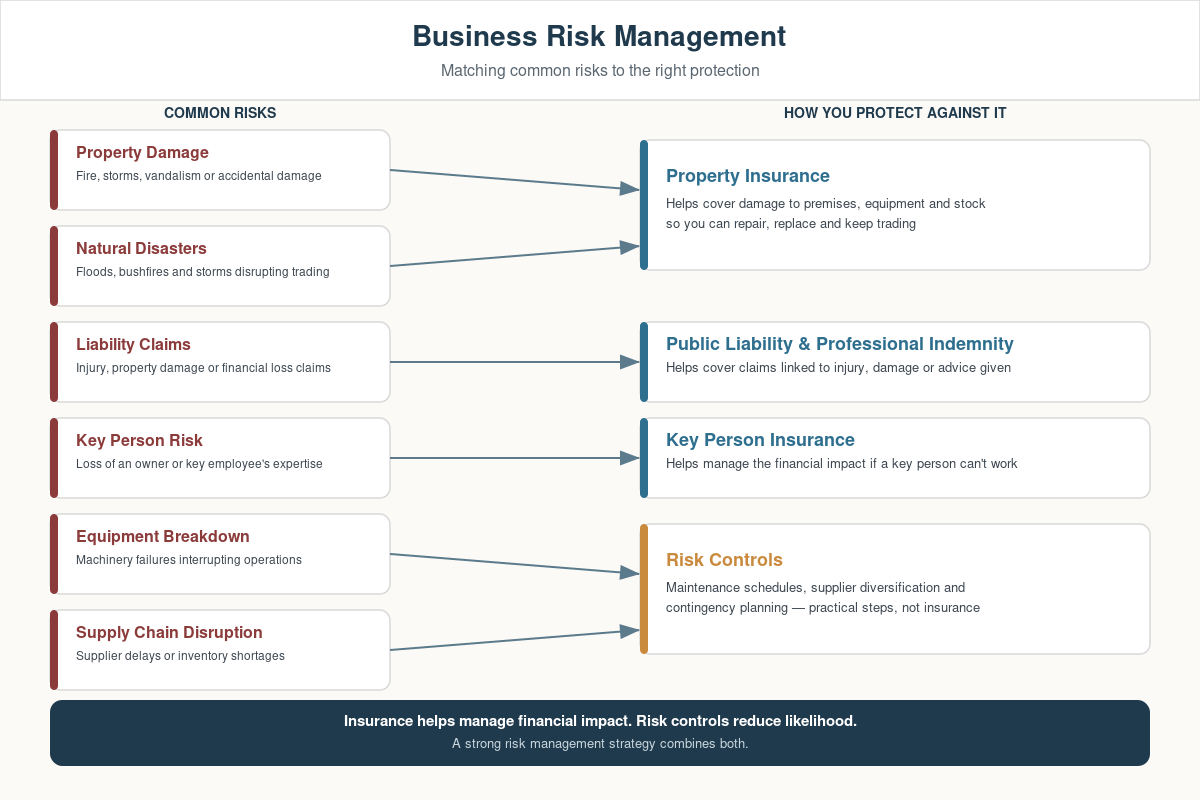
The risks your business faces will depend on its size, industry and day-to-day operations, but common exposures include:
Property damage
Fire, storms, vandalism and accidental damage affecting premises, equipment and stock.
Liability claims
Claims arising from customer injuries, property damage or financial loss linked to your business.
Equipment breakdown
Unexpected machinery or equipment failures that interrupt day-to-day operations.
Key person risk
Many businesses rely on the knowledge, experience or relationships of an owner or key employee. If that person is unable to work due to illness, injury or death, it can disrupt day-to-day operations, affect revenue and make it more difficult for the business to continue operating as usual.
Supply chain disruption
Supplier delays, transport issues, labour shortages or inventory constraints affecting production and customer demand.
Natural disasters
Floods, bushfires, storms and other events that damage property and disrupt trading.
Not every risk will apply to every business. Identifying the risks most relevant to your operations is the first step towards building a practical risk management plan that helps minimise disruption before issues escalate.
What Should a Business Risk Management Plan Include?
An effective risk management plan doesn’t need to be complicated; it just needs to suit your business. A practical, structured approach is far more valuable than trying to prepare for every possible scenario.
- Identify potential risks
Review every area of your business, including operations, finances, employees, suppliers, customers, technology and assets. - Assess likelihood and impact
Consider how likely each risk is to occur and the effect it could have, then prioritise those with the greatest potential impact. - Implement risk controls
Reduce risk through practical measures such as stronger cybersecurity, staff training, workplace safety procedures and equipment maintenance. - Review business insurance
Ensure your insurance aligns with the risks your business faces. While insurance won’t prevent an event, it can help manage its financial impact. - Monitor and update your plan
As your business grows and changes, regularly review your plan to ensure it continues to reflect your operations and evolving risks.
Where Does Business Insurance Fit Into Risk Management?
Business protection plays a key role in forming a strong, broad risk management strategy. Insurance does not prevent unexpected events, but it can be helpful in minimising financial impact when they do.
For example, succession planning and documenting key processes can help reduce the operational impact of losing an owner or key employee, while key person insurance can help manage the financial consequences if they’re unable to work. The same approach can be applied to:
- Property insurance
- Public liability insurance
- Professional indemnity insurance
- Key person insurance
Each cover addresses different risks, so the right combination is entirely up to what your business does, as well as what is important to you. Consider business risk management not as a one-off exercise, but a well-rounded routine that assures confidence in the unknown.
Reviewing and Strengthening Your Business Protection Strategy
Risk is an unavoidable part of running a business, and as your business evolves, so do the challenges it faces. Regularly reviewing your management strategy helps ensure your business remains prepared for the unexpected.
By combining forward planning, practical risk controls and appropriate business insurance, you can strengthen your resilience and better protect your operations.
At Panorama Financial Services, we help business owners understand their unique risks and develop tailored protection strategies. Whether you’re a sole trader or a large organisation, our advisers can help you build a well-rounded approach that supports your business now and into the future.
Frequently asked questions
Explore the answers to some common questions about how business risk management.
A business risk management plan is a roadmap for identifying potential risks and putting practical steps in place to reduce their impact. It helps your business respond more confidently when unexpected challenges arise.
Risk management helps you prepare instead of react. It can reduce disruptions, protect your people and assets, and make it easier for your business to recover when something goes wrong.
Common risks include property damage, cyber attacks, liability claims, equipment breakdowns, cash flow issues, supply chain disruptions and the loss of a key person. The biggest risks will depend on your business and industry.
Business insurance doesn’t prevent risks, but it can help manage the financial impact when unexpected events occur. It works best when it forms part of a broader risk management strategy.


Calendar
We’re here to help you protect what matters most.
Whether you’re planning for your family, your future, or your business, our team listens, simplifies, and guides you every step of the way.
Reach out and let’s build your peace of mind together.