

No business is ever immune to risk. Whether it’s a cyber attack, equipment failure, legal issue or unexpected loss of a key employee, unforeseen events can impact operations and place strain on the business. While it is impossible to prevent every challenge, being prepared can make a difference in how you navigate the challenge.
A strong risk management strategy can identify potential threats as well as reduce their impact, allowing you to respond effectively when something does happen. It also supports better decision-making, improves business continuity, and provides greater confidence across the board.
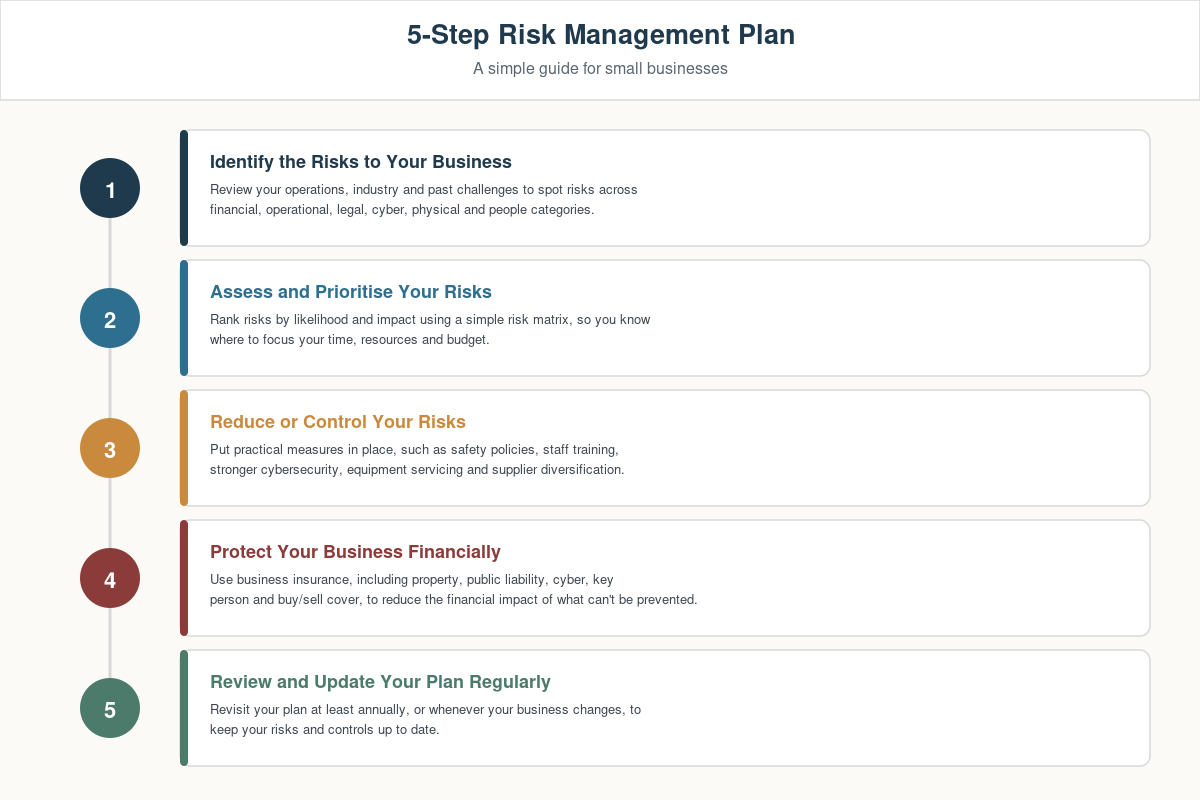
Creating a strong risk management plan doesn’t have to be complicated. This simple, 5-step guide outlines key points to consider and how to action them.
Step 1: Identify the Risks to Your Business
Because each business is different, the risks you’ll face often vary based on industry, size, and day-to-day operations. However, most risks tend to fall into the following categories:
- Financial – Cash flow and profitability
- Operational – Equipment breakdowns, supplier delay and workflow disruption
- Legal – Regulatory obligations and liability claims
-
- People-risk – Workplace injuries, buy/sell arrangements and the loss of an owner or key employee
In order to identify the risks relevant to your business, review each area of operations, reflect on past challenges and consider common risks within your industry. Once you have identified these risks, it’s important to determine which are most likely to occur as well as their potential impact.
Step 2: Assess and Prioritise Your Risks
Once you’ve isolated the risks facing your business, the next step is deciding which require the most attention. Risks can vary in priority, so it’s helpful to look at the likelihood of it occurring as well as what impact it could have.
Begin by considering risks that are both likely to happen and would have the biggest disruption. That’s not to say you should ignore lower priority or less-common risks, as they can also cause substantial financial stress and strain.
Many businesses utilise a basic risk matrix to rank issues from lowest to highest. This makes it easier to identify where to allocate time, resources and budget in order to get the best result.
After you have completed this step, you can begin to implement practical measures to reduce their likelihood or minimise their effect.
Step 3: Reduce or Control Your Risks
This step involves taking practical action to reduce the likelihood of risks occurring or lessening their impact if they do. While not every risk can be eliminated, many can be managed through thoughtful planning and everyday practices.
This could involve:
- Developing clear workplace safety policies
- Providing staff training
- Routine servicing of equipment
- Creating contingency plans
Taking proactive steps now is usually a more cost-effective method than dealing with the consequences as they develop later. By reducing exposure to risk where possible, you can improve resilience and operational stability in the event of the unexpected.
Step 4: Protect Your Business Financially
Even with controls in place, some events cannot be prevented. That’s why it’s important to consider business insurance as part of a broader protection strategy. Instead of replacing risk management, insurance complements it by reducing the financial impact of unforeseen events.
Depending on your circumstances, this can include:
- Public liability insurance
- Key person insurance
- Buy/Sell insurance
Each cover addresses different risks, so it’s important to consider how your business could be protected by these policies. The right protection depends on your industry, employees and overall risk profile. Reviewing insurance alongside your broader risk management strategy helps ensure your cover is aligned with what your business requires.
Step 5: Review and Update Your Plan Regularly
As your business evolves, so too do the risks it faces, which is why conducting regular reviews is part of ensuring you’re adequately protected. It’s a good idea to revisit your plan as you approach change, whether that be through introducing new staff, investing in new technology, or as legislation updates. Alternatively, looking at your strategy when your business insurance is due for renewal can also be a handy time to make changes if required.
Even if nothing major happens, conducting an annual review can identify emerging risks and confirm your controls are still effective. Put simply, a good strategy should move in stride with your business.
Building a More Resilient Business
Creating a risk management strategy does not need to be a complex process; it just requires a proactive approach. By identifying shortcomings, prioritising those that can have the biggest impact, putting in appropriate controls and securing financial stability through relevant insurances, you’re already in a better position to be prepared.
At Panorama Financial Services, we assist owners to understand their unique risks and develop a tailored strategy to protect what matters most to them through relevant insurances. Whether you’re reviewing an existing plan or starting from scratch, you can count on our advisors to work alongside you to secure the best result.
Frequently asked questions
Explore the answers to some common questions about how business risk management planning.
A risk management plan should identify the risks your business faces, assess their potential impact, outline practical ways to reduce them and review whether your business insurance provides appropriate financial protection. It should also be updated regularly as your business changes.
It’s a good idea to review your plan at least once a year, or whenever your business experiences significant changes, such as growth, new staff, new equipment, new services or changes to legislation.
Common risks include cash flow challenges, property damage, equipment breakdowns, liability claims, supply chain disruptions and the loss of a key owner or employee. The biggest risks will depend on your industry and how your business operates.
Business protection insurance can’t prevent unexpected events, but it can help reduce their financial impact. When combined with practical risk management strategies, it provides an extra layer of protection to help your business recover and keep moving forward.


Calendar
We’re here to help you protect what matters most.
Whether you’re planning for your family, your future, or your business, our team listens, simplifies, and guides you every step of the way.
Reach out and let’s build your peace of mind together.