

Why Small Businesses Need Succession Planning
Succession planning is important for every business, but it can be especially valuable for small businesses where the owner plays a key role in day-to-day operations.
Small business owners often manage important customer and supplier relationships, make financial decisions and hold valuable knowledge that can be difficult to replace. With fewer employees and resources, there’s also less flexibility in the event of unexpected disruption.
A strong succession plan outlines what happens if you retire, sell the business or face an unexpected event. It can provide peace of mind for employees and customers while helping protect the value you’ve built. Succession planning isn’t about expecting something to go wrong. It’s about being prepared for change and giving yourself more options when it happens.
How Small Businesses’ Succession Differs from Larger Businesses
Small businesses can face unique succession challenges because the owner is often closely involved in nearly every aspect of the business. They may manage key customer and supplier relationships, make important decisions and hold valuable knowledge that can be difficult to replace. With smaller management teams, there may also be fewer people ready to step into their role.
There are often fewer transition options too. Owners may need to consider family succession, an employee buy-out or selling to an external buyer.
This doesn’t mean small businesses are more vulnerable. It simply highlights why planning ahead can make the transition easier and give owners more options when the time comes.
Common Succession Options for Small Businesses
While there is no single right way for a business to create a succession plan, it is important to consider your goals, the business itself and the people involved. Some owners may want to keep the business within the family, while others may prefer to sell it or pass it on to an employee. These are some common options people consider:
Family Succession
Passing the business to a child or another family member can help to preserve the legacy of the business. However, it is important to consider their skill set, experience and interest in taking over. Ownership and fairness are also worth thinking about.
Employee Buy-Out
A long-term employee or management team may have the knowledge and experience needed to take over. An employee buy-out can also provide continuity for customers and staff.
Selling the Business
Some owners may choose to sell their business to another individual or company. Planning ahead can help prepare the sale, strengthen its value and make the overall transition easier.
External Buyers
Outside businesses or investors can provide a clear exit strategy while allowing the business to continue operating under new ownership.
The right option will always depend on your circumstances, which is why it’s worth considering your options and consulting financial advice well in advance.
Preparing Your Business for a Successful Transition
A good succession plan begins well before the owner decides to step away. Preparing the business early can make the eventual transition smoother, while also keeping the company in a strong position. Consider the following:
Documenting Important Processes
Make sure important knowledge isn’t only held by the owner. Document key processes and responsibilities, contacts and procedures so others know how the business operates.
Keeping Financial Records Organised
Ensure you have accurate, up-to-date financial records in order to make a transition or sale easier. They also provide a clear picture for potential successors and buyers.
Understanding The Value of Your Business
Knowing what your business is worth can help make solid decisions about its future. Consider getting a valuation in order to support discussions regarding transfers or potential sale.
Developing Future Leaders
Look for employees or family members who could take on greater responsibility and provide opportunities to build skills and experience. This can make it easier to identify potential successors.
Preparing for succession is not just about what happens when you leave. It can help make your business more organised, resilient and valuable overall.
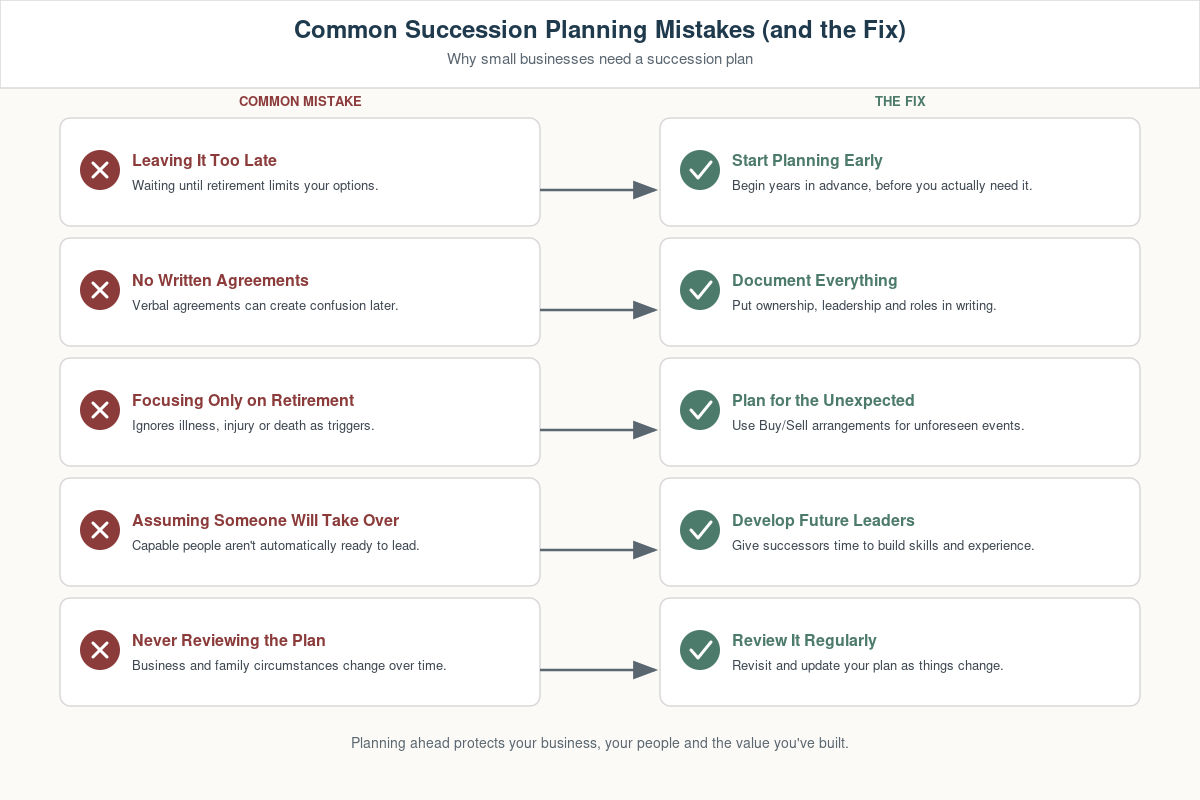
Common Succession Planning Mistakes
Even with good intentions, it’s easy to make succession planning overly complicated. Avoiding a few common mistakes can help to keep the process on track:
Leaving It Too Late
Waiting until retirement is a sure-fire way to limit your options. Unexpected events can also happen at any time, which is why it’s worth planning early
Failing to Document Agreements
Verbal agreements can create confusion. Important decisions concerning ownership, leadership and responsibilities should be written down.
Focusing Only on Retirement
Succession planning should also consider unexpected events such as illness, injury or death, not just a planned retirement. For businesses with multiple owners, Buy/Sell arrangements can help provide a clear plan for what happens to an owner’s share if the unexpected occurs.
Assuming Someone Will Take Over
A capable employee or family member may not automatically be ready to lead the business. Future leaders take time to develop.
Not Reviewing the Plan
Businesses and family circumstances change, so succession plans should be reviewed regularly and updated as needed.
Planning Ahead Protects Your Business
Succession planning is not about the size of your business; it’s about protecting the people, relationships and value of your company. For owner-operated businesses, having a plan can help protect your employees, customers and future, while also giving you more options when the time comes. Starting early is the best way to ensure this.
At Panorama Financial Services, we work closely with business owners to develop tailored succession plans that consider their business, financial and personal goals. Whether you’re planning for retirement, considering a sale or putting Buy/Sell arrangements in place to prepare for the unexpected, we can help you plan for the future with greater confidence.
Frequently asked questions
Explore the answers to some common questions about how business succession planning for small businesses.
It helps prepare for retirement, a sale or unexpected events. A good plan can protect the business’s value and provide greater certainty for employees and customers.
The earlier, the better. Starting several years ahead gives you time to prepare, make important decisions and adjust your plans if needed.
Common options include passing the business to family, selling to employees or management, or finding an external buyer. The right choice depends on your goals and circumstances.
Yes. Sole traders can plan for retirement, selling the business or unexpected events. The right approach will depend on the business structure and individual circumstances.


Calendar
We’re here to help you protect what matters most.
Whether you’re planning for your family, your future, or your business, our team listens, simplifies, and guides you every step of the way.
Reach out and let’s build your peace of mind together.