

What Is Life Insurance?
Life insurance is designed to provide financial support to your loved ones if you pass away. It generally provides a lump-sum payment to your chosen beneficiaries and, depending on the policy, may also pay a benefit following a qualifying terminal illness diagnosis.
You generally choose how much cover you need and pay regular premiums to keep your policy active. If you pass away and the claim meets the policy requirements, the benefit can help your family manage expenses such as the mortgage, bills, debts and other financial commitments.
Policies can vary, so it’s important to consider the terms, conditions, exclusions and definitions when choosing your cover.
How Does Life Insurance Work?
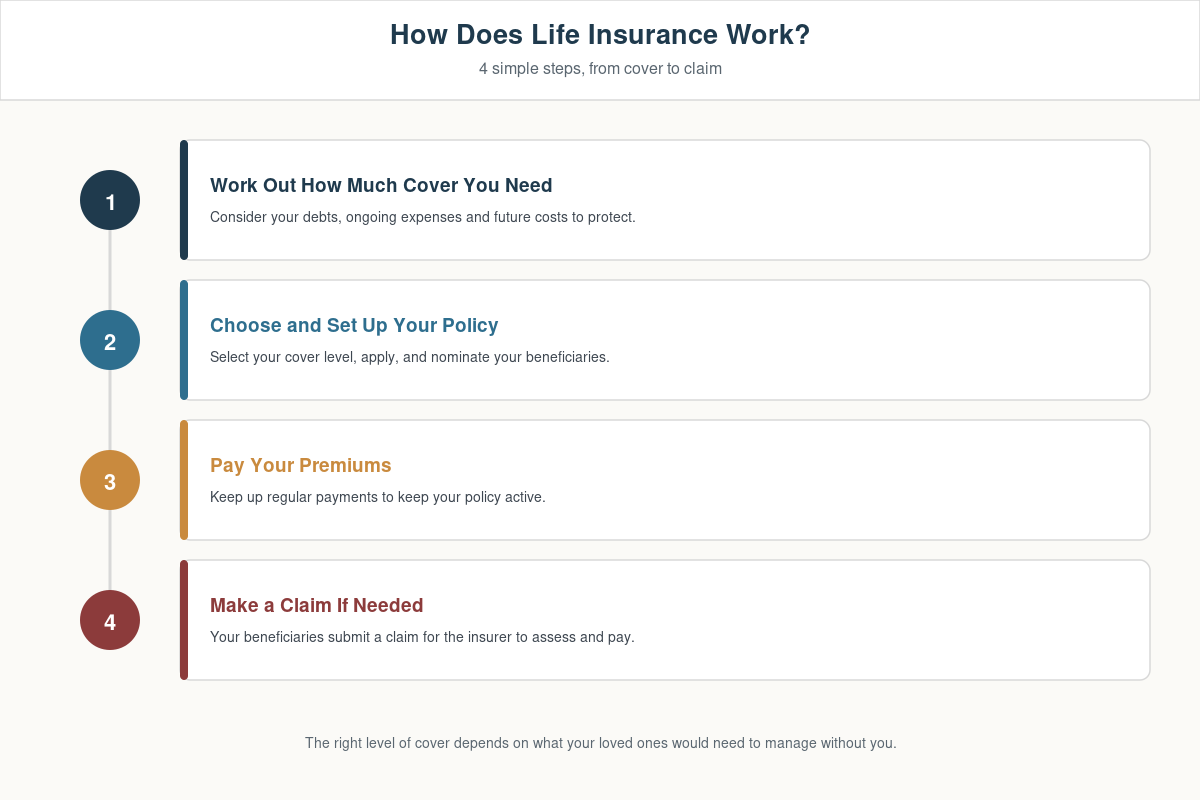
If you’ve never arranged life insurance before, the process can seem complicated. Here is a breakdown of the main steps:
1. Work out how much cover you need
Think about the financial impact your death could have on the people who rely on you. Consider your debts, ongoing expenses and any future costs you’d want to provide for.
2. Choose and set up your policy
Once you know what you need to protect, you can choose a suitable level of cover and apply for a policy. The insurer will generally ask about your health, lifestyle and occupation as part of the application. You’ll also set up your policy details, including nominating beneficiaries where applicable.
3. Pay your premiums
Once your policy is in place, you’ll pay regular premiums to keep your cover active. How much you pay will depend on factors such as your level of cover and policy terms.
4. Make a claim if needed
If you pass away or experience another event covered by the policy, the appropriate person can submit a claim. The insurer will assess it against the policy terms and, if accepted, pay the benefit.
What Does Life Insurance Cover?
Life insurance is primarily designed to provide a lump-sum payment if the insured person passes away. Depending on the policy, it may also pay a benefit if the insured person is diagnosed with a qualifying terminal illness. Life insurance is just one type of personal insurance. Other types of cover are designed to protect you in different situations:
- TPD insurance can provide a benefit if you have become totally and permanently disabled, based on the definition in your policy
- Trauma insurance can provide a lump-sum payment if you are diagnosed with a certain serious medical condition as stated in your policy
- Income protection is designed to replace part of your income if illness or injury means you’re unable to work
The right mix of cover will depend on your circumstances and what you’re looking to protect.
Who Should Consider Life Insurance?
Life insurance can be worth considering if other people would be financially affected if you were no longer around.
You may want to consider cover if:
- You have children or dependants
- A partner who relies on your income
- A mortgage or other significant debts
It can also be worth considering if you’re supporting family members or have ongoing expenses your loved ones may struggle to manage without your income.
Your needs can change over time, too. Someone who is single with few financial commitments may have very different needs from someone with a mortgage, children and a partner who relies on their income.
Ultimately, life insurance isn’t simply about your age or relationship status. It’s about considering what financial responsibilities would remain if you were no longer around, and who would be left to manage them.
How Much Life Insurance Do You Need?
There’s no set amount that suits everyone, so a useful starting point is to look at the financial gap that could be left behind. Consider any debts you’d want covered, ongoing household costs and the future needs of your dependants.
Then look at what you already have available, including savings, investments, superannuation and existing insurance.
Together, these can give you a clearer picture of how much cover you may need. As your life and finances change, it’s also worth reviewing your cover to make sure it still suits your circumstances.
How Do You Get Life Insurance in Australia?
There are two main ways to get life insurance in Australia: through your superannuation or through a policy held outside super.
Before taking out new cover, it’s worth checking whether you already have life insurance through your super fund and, if so, how much cover you have.
Through superannuation
Some super funds offer life insurance, with premiums often deducted from your super balance. This can be convenient, but the cover available may not meet your needs, and features, premiums, and conditions can vary between funds.
Outside super
You can also arrange life insurance as a standalone policy. This may give you different options depending on your circumstances and the level of cover you need.
Life Insurance Doesn’t Have to Be Complicated
Life insurance can feel like a lot to get your head around, especially when you’re trying to work out how much cover you need, what you may already have through super and which policy is actually right for you.
That’s where good advice can help.
At Panorama Financial Services, we take the time to understand your situation first. We look at your financial commitments, the people who rely on you and any cover you already have in place, then help you work out what life insurance protection actually makes sense.
We can also help you compare options, understand the differences between policies, and put the right cover in place without making the process harder than it needs to be. If you’re considering life insurance, or you’re not sure whether your current cover is enough, speak with the Panorama team. We’ll help you make sense of it and make sure you’re properly covered for what matters most.
Frequently asked questions
Explore the answers to some common questions about the cost of Life Insurance.
Life insurance isn’t compulsory in Australia. It’s generally a personal choice based on your circumstances, financial commitments and whether others rely on you financially.
Some super funds automatically include life insurance as part of their membership, while others allow you to opt in. Check with your super fund to see whether you have cover, how much you have and what conditions apply.
There’s no set age that’s right for everyone. It can become particularly important when you take on financial responsibilities such as a mortgage, have children or other dependants, or someone relies on your income. Your insurance needs can also change as your circumstances change.


Calendar
We’re here to help you protect what matters most.
Whether you’re planning for your family, your future, or your business, our team listens, simplifies, and guides you every step of the way.
Reach out and let’s build your peace of mind together.