

Can Seniors Get Life Insurance in Australia?
If you’re getting older and wondering whether it’s too late to take out life insurance, the good news is that you always have options. There is no specific age at which life insurance becomes unavailable.
Different insurers may have varying maximum entry ages, policy options and eligibility requirements, meaning what’s available depends on where you apply.
Your personal circumstances matter too. Your age, health and medical history, along with the type and amount of cover you’re looking for, can all affect what may be available to you.
So, there isn’t a simple yes-or-no answer. It depends on the insurer, the policy and your individual situation.
Why Might You Need Life Insurance Later in Life?
Age is not always a determining factor for taking out life insurance. Situations change, and it’s always a smart move to consider your financial future.
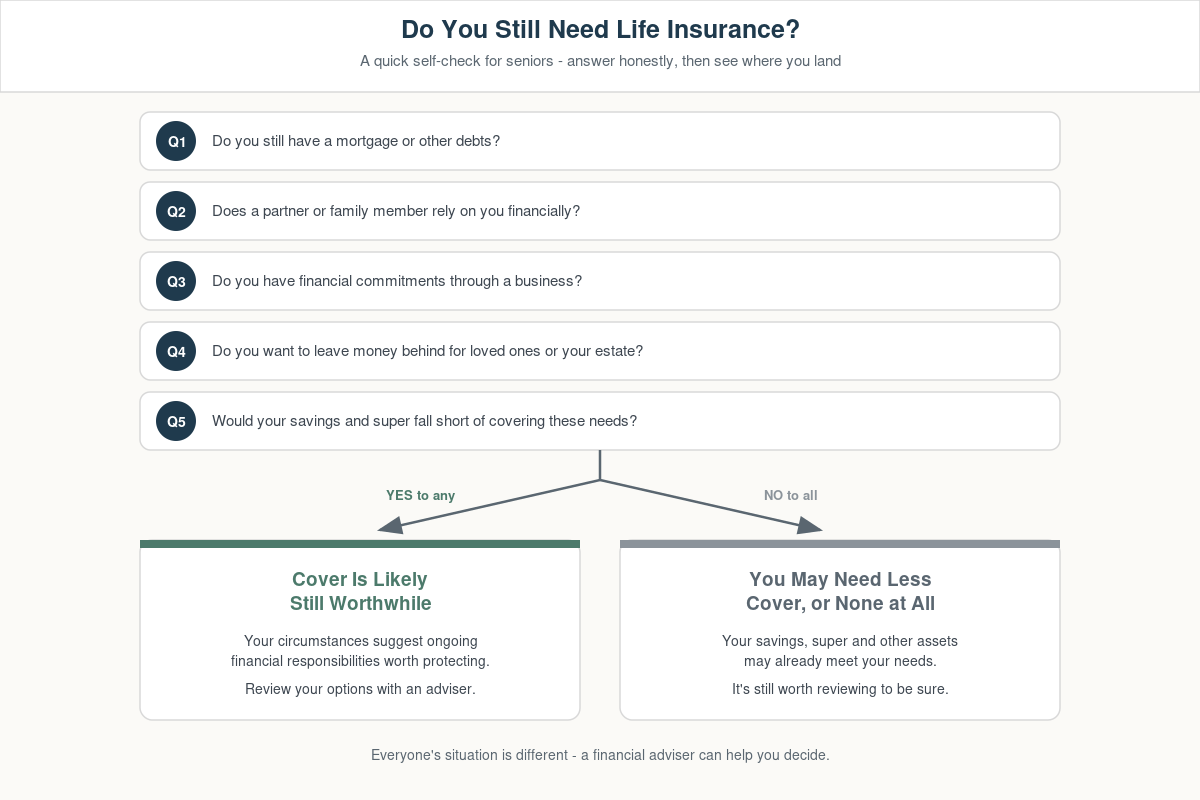
You may still have a mortgage or other debts, or a partner or family member who relies on you financially. If you’re involved in a business, you may also have financial commitments to consider. Life insurance may also form part of your broader estate planning, helping you provide financial support for the people you leave behind.
Of course, not everyone needs life insurance later in life. The key is to review your current financial position and consider whether you still have responsibilities or financial risks you want to protect against.
How Age and Health Affect Your Life Insurance Options
When applying for life insurance later in life, your age and health can have a greater influence on the options available to you.
Generally, premiums can be higher as you get older. Your current health and medical history can also be taken into account, and you may be asked about existing or previous health conditions, medications and medical treatments. This forms part of the insurer’s underwriting process, where they assess your application to determine whether they can offer cover and, if so, on what terms.
Having a health condition doesn’t necessarily rule out life insurance, but it can affect the cover available, the premium you pay and any special terms that may apply.
How Much Life Insurance Might You Need as a Senior?
The amount of life insurance cover you needed in your 30s or 40s may look very different from what you might need later in life. As your circumstances change, so can the financial reasons for having cover.
Earlier in life, cover might have been about replacing your income, protecting a young family or helping pay off the mortgage. Later on, you may have fewer financial responsibilities, but you could still have outstanding debts, ongoing expenses or a partner who relies on your financial support. It’s also worth looking at your broader financial position. Your savings, investments, superannuation and other assets may reduce the amount of cover you need, while any ongoing financial commitments and the support you want to leave for loved ones should also be considered.
The goal isn’t to have as much cover as possible. It’s to have an appropriate level of protection for the financial risks that are still relevant to you, at a cost that makes sense for your circumstances.
Should You Keep Existing Life Insurance or Look for New Cover?
If you already have life insurance, don’t assume you need to replace it just because you’re getting older or another policy looks cheaper. Start with your existing cover. Does it still provide the level of protection you need? Does the cost fit within your budget? Has your financial position changed since you first took out the policy?
Applying for new cover may also involve answering health questions or undergoing a new health assessment. Your age, health and medical history can affect the options available to you, as well as your premium.
And while a new policy may seem more affordable, it may not provide the same level of protection, features or terms as your existing cover. Before cancelling your existing policy, compare it carefully with any new cover you’re considering. A financial adviser can help you understand the differences and decide whether making a change makes sense for your situation.
Finding Life Insurance That Suits Your Stage of Life
When it comes to life cover, age is only one part of the picture. What matters most is whether having cover still makes sense for your circumstances and the financial risks you want to protect against.
Consider your current debts, savings, superannuation, and other assets, as well as who may be financially impacted if you pass away. If you already have cover, it’s also worth reviewing whether it still meets your needs and remains affordable.
If you’re unsure whether you still need life insurance, Panorama Financial Services can help you work through it. We’ll review your circumstances, talk you through your options, and help you understand what makes sense for you.
It’s Not Just About Your Age
There isn’t one answer that applies to every older Australian when it comes to life insurance. Cover may still be available, but that doesn’t necessarily mean you need it. The important question is whether it still serves a purpose for your circumstances.
If you’re wondering whether life insurance still makes sense for you, get in touch with the Panorama team to talk through your options.
Frequently asked questions
Explore the answers to some common questions about the cost of Life Insurance for seniors in Australia.
Yes, it may still be possible to get life insurance after 60. However, the options available can vary between insurers and depend on factors such as your age, health, medical history and the type and amount of cover you’re looking for. It’s worth comparing your options rather than assuming you’re too old to get cover.
There isn’t one maximum age that applies to every life insurance policy. Different insurers can have different maximum entry ages and policy conditions. As you get older, your options may become more limited, so it’s important to check what cover is available for your particular circumstances.
Generally, life insurance premiums can become more expensive as you get older. Age is one of the factors insurers consider when assessing risk, along with things such as your health, lifestyle and the amount and type of cover you choose. The actual cost will depend on your individual circumstances.
It depends on your circumstances. You may still have a mortgage, debts or financial dependants, or you may want to provide financial support for your partner or loved ones. On the other hand, you may have fewer financial responsibilities and enough assets to meet your needs without life insurance. The key is to consider what purpose the cover would serve and whether the benefits justify the ongoing cost.


Calendar
We’re here to help you protect what matters most.
Whether you’re planning for your family, your future, or your business, our team listens, simplifies, and guides you every step of the way.
Reach out and let’s build your peace of mind together.